Can AI Edit Videos For You in 2026? An Editor's Honest Answer
Yes, with a big asterisk. After a year of running AI editing tools inside real client work, here's exactly what they can take off your plate, and the parts of the edit they still can't touch.
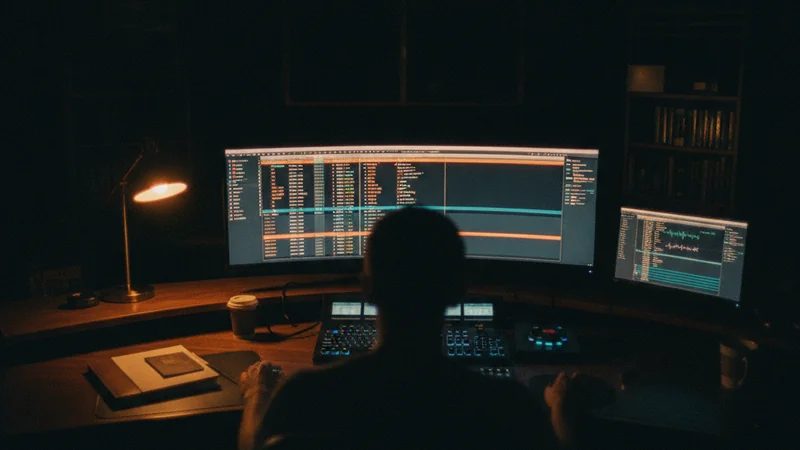
"Can AI edit videos for me?" is one of the most-asked questions in video production right now, and most answers you'll find are either a tool advert or a shrug. Here's the honest version from someone who edits professionally and runs AI tools inside real client work every week: yes, AI can now do a genuinely useful share of your editing. No, it cannot yet do the part that makes an edit good.
The short version: AI reliably handles the mechanical layer of editing. Rough cuts, silence removal, captions, reframing, clipping, colour matching. What it does not handle reliably is the editorial layer of story, pacing and taste. The winning workflow in 2026 is AI for the first 70%, human judgement for the last 30%.
What AI Editing Actually Does Well in 2026
The capabilities below are production-real, not demo-reel promises:
- Transcript-based cutting. Modern editors treat your footage like a text document: delete a sentence in the transcript and the corresponding footage is cut. For interviews, podcasts, and talking-head content, this is the single biggest time-saver AI has delivered.
- Silence and filler removal. Automatic removal of pauses, "um"s and dead air. A pass that used to consume an afternoon now takes minutes.
- Captions and subtitles. Auto-generated, styled, platform-native captions are effectively solved. Accuracy on clean audio is strong; you proof-read rather than transcribe.
- Long-form to short-form clipping. Tools analyse a long recording, find the moments most likely to hold attention, and cut vertical clips with captions. The hit rate isn't perfect, but it turns one recording into a week of social content with minutes of human curation.
- Reframing and reformatting. Horizontal to vertical conversion with subject tracking: the tool keeps the speaker centred while cropping 16:9 down to 9:16.
- Colour matching and audio cleanup. One-click shot matching and voice isolation have become good enough for most non-broadcast work.
Where AI Editing Still Fails
Just as important, the things no tool currently does to a professional standard:
- Story structure. AI does not know that your best moment is buried at minute 34, that the opening should actually be the ending, or that the whole middle section is killing the piece. Structure is still entirely human.
- Pacing for emotion. Knowing when to hold a shot two beats longer, when to cut hard, when silence works harder than music. That's taste, and the tools don't have it.
- Brand judgement. An AI editor will happily produce something competent that is completely wrong for the brand. Competent-but-wrong is the most expensive kind of wrong in client work.
- Complex multi-source narratives. Documentary-style edits weaving interviews, b-roll, archive and graphics still need a human driving every meaningful decision.
Can AI Edit Videos for YouTube?
Yes, and YouTube is honestly where AI editing earns its keep most. The standard 2026 workflow looks like this: record long, cut the rough assembly from the transcript, run silence removal, auto-caption, then spend your human hours on the two things that decide performance: the hook (first 30 seconds) and the structure. Creators publishing weekly report the mechanical passes dropping from days to hours. The catch: an AI-assembled video that no human restructured tends to feel assembled. Watch time tells on it.
Can AI Edit Videos for TikTok and Instagram?
Short-form is the AI sweet spot, because short-form editing is mostly mechanical: reframe to vertical, caption boldly, cut to the strongest 30 seconds. AI clip tools do all three. Where humans still win is selection. The difference between a clip that does 400 views and one that does 40,000 is usually which moment got picked, and the tools' guess is decent but beatable. Curate the AI's shortlist; don't auto-post it.
Which AI Can Edit Videos for Free?
Most serious tools run a free tier that's genuinely usable for learning the workflow, with the usual trade-offs: watermarks, resolution caps, or a monthly minute allowance. That's fine for testing and personal projects. The moment the output is for a client, a brand, or monetised content, budget for a paid tier. Clean exports, commercial rights and no watermark are what you're actually buying. The same logic applies to AI generation, which is why our own Studio gives you free images every day to test quality before you ever pay for a render.
The Part Nobody Tells You: AI Editing Still Needs an Editor
Every tool in this category is marketed as "AI edits your video for you." What they mean is: AI performs editing operations for you. The decisions (what story, what order, what feeling) remain yours, and the gap between an AI-assembled video and a directed one is obvious to every viewer even if they can't name it.
That's also the honest pitch for hiring it out. If the edit matters (a brand film, a product launch, content that represents your business), the value isn't in the software, it's in the judgement driving it. That's what our AI video editing services guide covers in depth, and it's how we work at AIVideos.eu: AI tools for speed, twenty-five years of editorial craft for the decisions.
FAQ
Can AI edit videos for me?
Yes. AI can now handle a real share of editing work: rough cuts from transcripts, silence and filler removal, captions, colour matching, reframing for vertical, and clipping long recordings into short-form highlights. What it can't yet do reliably is the judgement layer: story structure, pacing for emotion, and brand taste. Treat AI as a fast assistant editor, not the editor.
Can AI edit videos for YouTube?
Yes, and YouTube is where AI editing is strongest. Transcript-based editors cut talking-head footage quickly, AI handles captions and silence removal, and clip tools turn long videos into Shorts. Most working YouTubers now use AI for the mechanical passes and keep a human on the final structure and hook.
Which AI can edit videos for free?
Several tools offer genuinely usable free tiers, typically with watermarks, resolution caps, or monthly limits. Free tiers are ideal for testing whether an AI-assisted workflow fits before paying. For client or brand work, expect to need a paid tier for clean exports and commercial rights.
Can AI edit videos for TikTok and Instagram?
Yes. Short-form is the sweet spot. AI tools reframe horizontal footage to 9:16, auto-caption in platform-native styles, and cut highlight clips from longer recordings. The result usually needs a human pass on hook selection, but the mechanical conversion work is largely solved.
Will AI replace video editors?
Not the good ones. AI is absorbing the mechanical layer of editing: cutting, captioning, conforming, reformatting. The editorial layer has not been automated at all, and that layer is deciding what the story is, what to leave out, and what the brand should feel like. Editors who direct AI tools are becoming dramatically faster; editors who only did mechanical work are the ones at risk.
Generate cinematic AI video, from €5.99
32 AI models. No subscription. Buy credits, generate on demand, own the results outright.
Also on Android. The AI Videos Studio app, with the same account and credits.