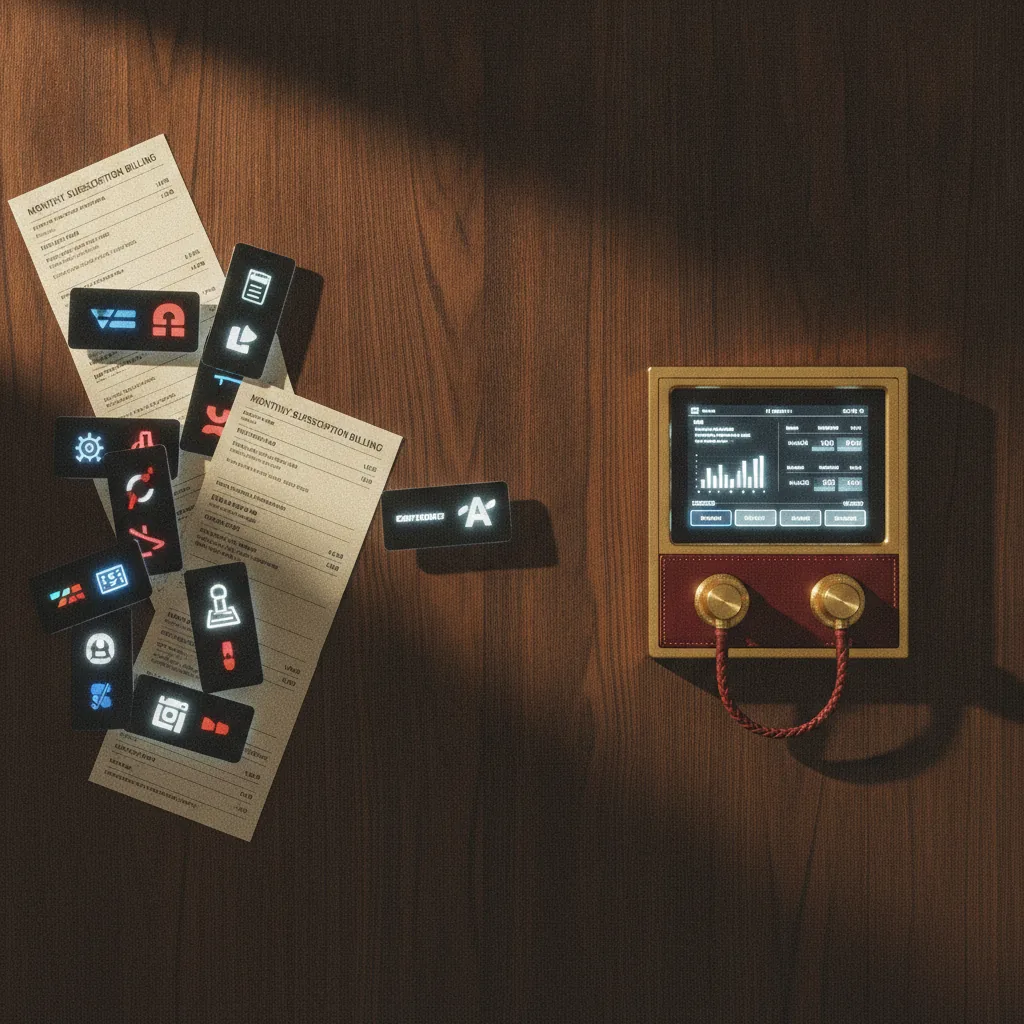
The Stack Tax
It starts innocently. You sign up for one AI video tool because it makes a great hero shot. Then you add a second because the first can't do consistent characters. Then a voice tool, because neither does audio well. Then an editor to stitch it together, and a fifth for the one effect none of the others nail.
Six months later you're paying for a stack you half-use, every subscription renews whether you touched it that month or not, and nobody on the team can say with a straight face what the total monthly bill actually is. That's the stack tax, and a lot of teams are paying it without ever deciding to.
After twenty-five years in production, I can tell you this isn't a tools problem. It's a procurement problem. And like most procurement problems, the fix is to decide on purpose what you're paying for - instead of accumulating it by accident.
Why One Tool Is Never Enough
The reason the stack grows is simple: every AI video tool is genuinely best at one thing and mediocre at the rest. One wins on cinematic control. One wins on duration-to-price for volume. One wins on native audio. One wins on lip sync. None of them wins on all of it.
So if your work spans different kinds of shots - and most real work does - no single subscription covers you, and you end up holding several. That's not you being undisciplined. It's the honest state of the market right now. We mapped which tool wins at what in the AI video cost guide, and the short version is: the "best" tool depends entirely on the shot in front of you.
The Costs You Don't See on the Invoices
The subscription fees are the visible cost. The expensive part is everything around them:
- Context-switching. Every tool has its own interface, prompt quirks, and export settings. Moving between five of them all day is a real tax on focus and speed.
- Learning curves, repeated. Each tool you add is another control surface to get fluent in - and they keep updating.
- Dead weight. Subscriptions you keep "just in case" renew silently. The month you don't use a tool, you still pay for it.
- Credit waste, multiplied. Spread your generations across five tools and you re-roll in five places. (We covered how to stop the per-tool bleed in why your credits keep getting burned.)
Add those up and the stack costs far more than the line items suggest. There are two clean ways out.
Option 1 - Consolidate to a Multi-Model Hub
If you want to keep doing the work yourself but kill the subscription sprawl, a multi-model hub is the move. Tools like Pollo AI put several video engines behind a single login and one bill, so you pick the right model per shot without maintaining a separate subscription for each. We reviewed how that works in the Pollo AI multi-model hub review.
A hub won't always beat a best-in-class single model on its home turf, and you're still the one operating it. But for breadth without the bill-stacking - and without five interfaces to switch between - it's the most sensible base camp for a solo creator or a small team that wants to stay hands-on.
Option 2 - Outsource the Whole Pipeline
The other way to collapse the stack is to not run it at all.
This is the option most teams forget they have. Every subscription, every learning curve, every renewal, every re-roll exists because you decided to operate the tools yourself. The moment that stops being a good use of your time - and for a lot of brands and agencies, it already has - the entire stack tax disappears. You're not paying for five tools and the hours to drive them; you're paying for finished footage.
That's what we do. We keep the stack so you don't have to - fluent in the right tool for each shot, across Europe, the UK and the US, fully remote. You bring a brief; we deliver the video, on a fixed, predictable basis instead of an unpredictable pile of monthly bills. It's the same logic that's made AI video agencies the fastest-growing corner of the market - see why brands are hiring AI video agencies. Browse the gallery, look at our production services, and tell us what you're making.
How to Decide
| Your situation | The cheaper call |
|---|---|
| Solo creator, hands-on, high volume | Consolidate to a hub (one login, one bill) |
| Small team, mixed shot types | Hub for the routine work, outsource the hero pieces |
| Brand or agency, time-poor, client deadlines | Outsource the pipeline - finished footage, fixed cost |
| You can't name your total monthly AI video spend | Audit it this week, then pick one of the above |
Quick Answers
How many AI video subscriptions do I actually need? Usually fewer than you have. Most teams can cover the routine work with one multi-model hub and reserve outside help for the hero shots - rather than holding five specialist subscriptions year-round.
Is a multi-model hub cheaper than separate subscriptions? Often, yes - one bill instead of several, and you stop paying for tools you barely touch. Whether it's right depends on whether you still want to operate the tools yourself.
What if I don't want to manage any of it? Then outsourcing is the cleaner maths: one predictable fee for finished video, with the whole stack - and its costs - handled for you. That's exactly what our studio is for.
The Bottom Line
The AI video stack grows by accident; it only shrinks on purpose. Decide what you're actually paying for. If you want to stay hands-on, collapse five subscriptions into one hub. If running the pipeline stopped being the best use of your time, hand it over and pay for the output instead of the overhead. Either way, the goal is the same: stop letting the stack tax renew itself every month while you weren't looking.
Generate cinematic AI video — from €15
Five frontier models. No subscription. Buy credits, generate on demand, own the results outright.