AI Video Model Comparison: 48 Renders, 8 Models, 13 Usable
No single AI video model won. I rendered the same six shot briefs on eight models, 48 clips, and judged every one. 13 were good enough to show a client. The cheapest model in the test, Veo 3.1 Lite at $0.25, delivered a car tracking shot that Seedance 2.5 missed at $2.37.
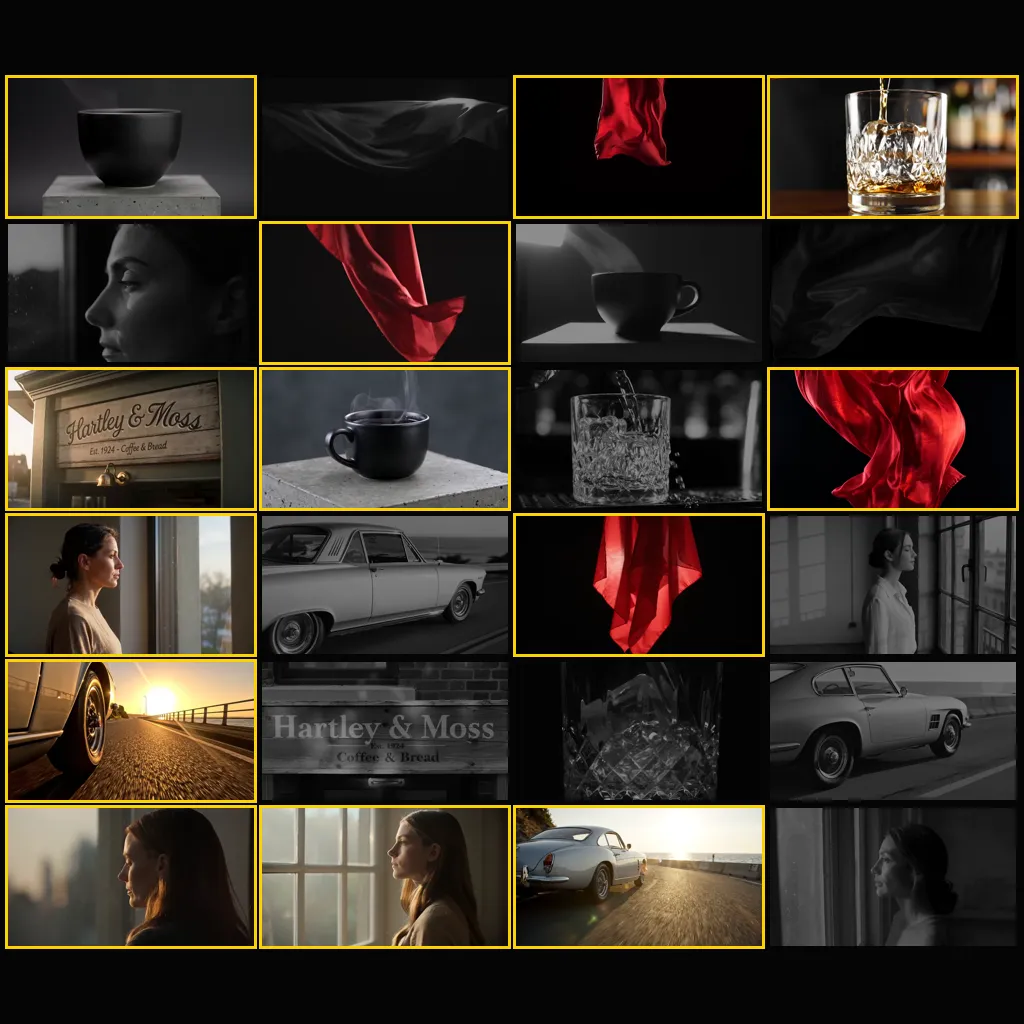
No single AI video model won this test. I rendered the same six shot briefs on eight models, 48 clips in total, and watched and judged every one against a simple standard: would I put it in front of a client? Thirteen passed. Thirty-five did not.
The model that did best per dollar was the cheapest one in the test. The dearest delivered two shots, and a cheaper model delivered both of those as well.
That is the whole argument for routing shots by type instead of picking a favourite model. The rest of this post is the evidence, shot by shot, with what each render cost.
What 48 Renders Actually Showed
- No model delivered all six shots. The best record was three of six, shared by Wan 3.0 and Veo 3.1.
- Price did not predict quality. On the car tracking shot, Veo 3.1 Lite delivered at $0.25 a render. Seedance 2.5 cost $2.37 and missed. That is 9.5 times the price for the clip I could not use.
- Two shots had exactly one winner. Only Veo 3.1 delivered the whisky pour. Only Seedance 2.0 delivered the shop sign shot.
- Two models went nought for six. MiniMax H3 and HappyHorse 1.1 did not deliver a single usable clip on these briefs.
- The whole grid cost $50.89 to render. The cheapest usable clip for each of the six shots, picked in hindsight, adds up to $5.02.
That last pair of numbers is the cost of not knowing. You pay it once per shot type, or someone pays it for you.
How the Test Worked
Six shot briefs, each an archetype that keeps coming up in commercial work:
- Dolly in on a face. A woman in profile at a tall window, late afternoon sun raking across her cheek, 85mm, shallow depth of field, dust in the light. She blinks slowly and does not turn.
- Product hero. A matte black ceramic coffee cup rotating slowly on a polished concrete plinth, one soft key from upper left, faint steam, dark grey seamless.
- Liquid pour. Amber whisky pouring into a heavy cut-crystal tumbler in slow motion, ice cracking, backlit so the glass glows, droplets suspended.
- Car tracking. A low tracking shot alongside a vintage silver coupe on a coastal road at golden hour, camera at wheel height matching speed, heat haze, sharp tyre detail.
- Fabric motion. A length of deep red silk falling and billowing in slow motion against black, rim lit so the edges glow translucent. No hands, no figures.
- In-frame text. A hand-painted timber shop sign above a cafe door, reading "Hartley & Moss", with "Est. 1924 - Coffee & Bread" beneath in smaller lettering, as the camera pushes in.
Each brief went to the same eight models: Veo 3.1 Lite, MiniMax H3, Wan 3.0, HappyHorse 1.1, Flux 3, Seedance 2.0, Veo 3.1 and Seedance 2.5. One render per model per shot, 16:9, at 720p (MiniMax H3 at 768p, because its ladder has no 720p rung). Veo has no 5-second option, so its clips are 4 seconds; everything else is 5.
The shot was the same for every model. The wording was not.
These providers want different prompt shapes, and sending one generic block to all eight would have measured how well each model copes with a prompt written for somebody else. So Veo got the shot type front-loaded and its own sentence for audio. Seedance got a structured brief with labelled sections. MiniMax got deliberately the shortest version, because its own guidance says piling on detail hurts frame-to-frame consistency. Wan got subject, place and movement first, then camera and style. Flux 3 and HappyHorse 1.1 have no published prompt guidance, so they got the neutral cinematic description above.
The in-frame text brief is hard on purpose. Our own earlier renders had already caught Veo garbling in-frame text and Seedance garbling background signage, and an easy word like "OPEN" can come out right by luck. Mixed case, an ampersand, a date and a two-line hierarchy cannot.
Every figure below is what the provider charged in US dollars for that render, at the tier and length it actually ran. Not a list price, and not a Studio price.
Every Shot, Every Model
Models run cheapest first. Yes means I would show it to a client.
| Model | Per render | Length, tier | Dolly in | Product | Liquid | Car | Fabric | Text | Delivered |
|---|---|---|---|---|---|---|---|---|---|
| Veo 3.1 Lite | $0.25 | 4s, 720p | No | No | No | Yes | Yes | No | 2 of 6 |
| MiniMax H3 | $0.30 | 5s, 768p | No | No | No | No | No | No | 0 of 6 |
| Wan 3.0 | $0.50 | 5s, 720p | Yes | Yes | No | No | Yes | No | 3 of 6 |
| HappyHorse 1.1 | $0.70 | 5s, 720p | No | No | No | No | No | No | 0 of 6 |
| Flux 3 | $0.85 | 5s, 720p | No | Yes | No | No | No | No | 1 of 6 |
| Seedance 2.0 | $1.52 | 5s, 720p | Yes | No | No | No | No | Yes | 2 of 6 |
| Veo 3.1 | $2.00 | 4s, 720p | No | No | Yes | Yes | Yes | No | 3 of 6 |
| Seedance 2.5 | $2.37 | 5s, 720p | Yes | No | No | No | Yes | No | 2 of 6 |
Read down a column and the difficulty of each shot shows itself. Fabric was the easiest brief, with four of eight delivering. The whisky pour and the shop sign were the hardest, with one each.
What Each Usable Clip Really Cost
The per-render price is what you see on a pricing page. The number that matters is what you spend per clip you can actually use, because the misses are billed too.
| Model | Delivered | Spent on all 6 shots | Cost per usable clip |
|---|---|---|---|
| Veo 3.1 Lite | 2 of 6 | $1.50 | $0.75 |
| Wan 3.0 | 3 of 6 | $3.00 | $1.00 |
| Veo 3.1 | 3 of 6 | $12.00 | $4.00 |
| Seedance 2.0 | 2 of 6 | $9.10 | $4.55 |
| Flux 3 | 1 of 6 | $5.10 | $5.10 |
| Seedance 2.5 | 2 of 6 | $14.19 | $7.10 |
| MiniMax H3 | 0 of 6 | $1.80 | none usable |
| HappyHorse 1.1 | 0 of 6 | $4.20 | none usable |
Wan 3.0 and Veo 3.1 tied on delivery. One of them cost four times as much per usable clip to get there.
Five Findings Worth Knowing
1. The cheapest model beat the dearest on the car shot
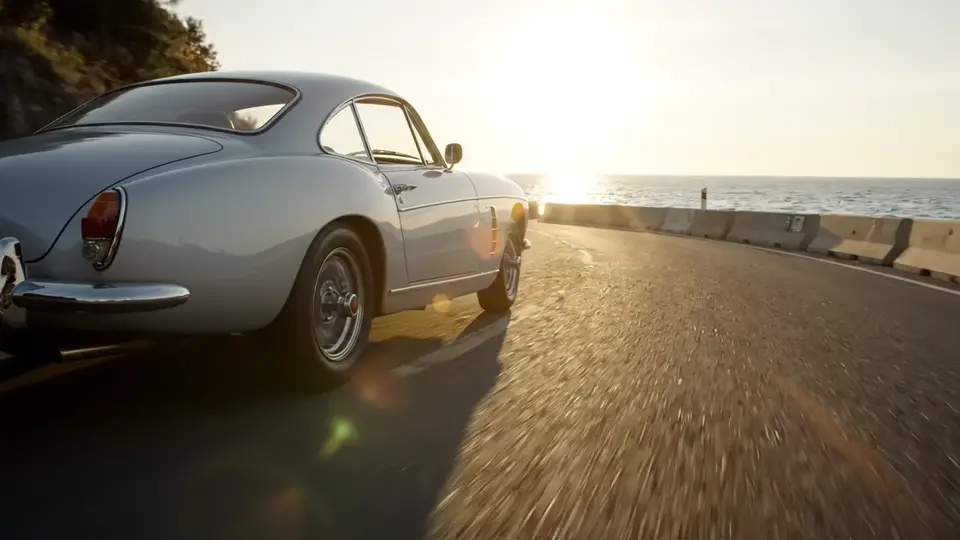
Veo 3.1 Lite, car tracking, 4 seconds at 720p, $0.25. Kept.
This is the clip I would point anyone to first. Veo 3.1 Lite delivered the low tracking shot for $0.25. Seedance 2.5, the most expensive model in the test, rendered the same brief for $2.37 and I could not use it. Seedance 2.0, Wan 3.0, Flux 3, HappyHorse 1.1 and MiniMax H3 missed it too.
To be fair to the comparison: Veo renders 4 seconds where the others render 5, so per second the gap narrows to roughly 7.6 times. Still not close.
2. The full Veo 3.1 earned its premium on exactly one shot
Veo 3.1 costs $2.00 a render. Veo 3.1 Lite costs $0.25, eight times less, at the same 4 seconds and 720p. Lite delivered the car and the fabric. Full Veo 3.1 delivered both of those and the whisky pour.
So across six briefs, the only shot where paying eight times more bought a result Lite could not give me was the liquid. If your shot list has no pours, splashes or glassware in it, that is worth knowing before you choose a tier. Our Veo 3.1 review covers the rest of what the full model offers.
3. Two shots had one winner each

Veo 3.1, liquid pour, 4 seconds at 720p, $2.00. The only one of eight kept.
These are the rows where choosing wrong costs you every other attempt. On the whisky pour, Veo 3.1 was the only model of eight that delivered. On the shop sign, it was Seedance 2.0.
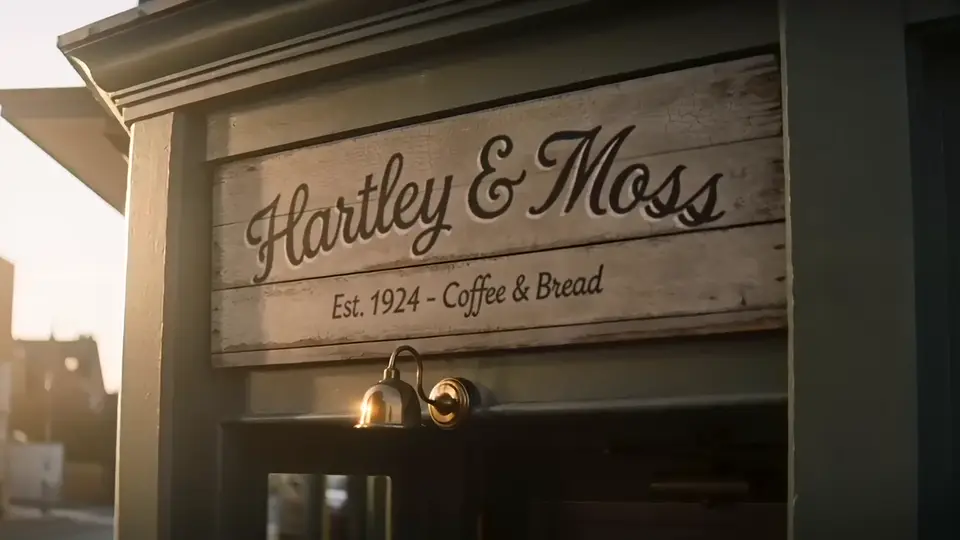
Seedance 2.0, in-frame text, 5 seconds at 720p, $1.52. The only one of eight kept.
The spelling was not what sank the other seven. Several of them render "Hartley & Moss" perfectly. What failed them was the shot: the brief put the sign above a cafe door, and they hung it somewhere else, some with a door handle in the middle of the frame, so it read as a board on a wall rather than a shop's sign. Seedance 2.0 is the only render that set it up as the cafe's sign over the door. Its lettering is a script rather than the serif capitals asked for, but it spells both lines correctly and keeps the large name over the smaller line.
4. Newer and dearer did not mean better: Seedance 2.0 against 2.5
Seedance 2.5 costs $2.37 a render here and Seedance 2.0 costs $1.52. Each delivered two of six. They were not the same two. Seedance 2.0 delivered the dolly in and the shop sign; Seedance 2.5 delivered the dolly in and the silk.
Both of Seedance 2.5's keeps were also delivered by cheaper models: Wan 3.0 got the dolly in at $0.50, and Veo 3.1 Lite and Wan 3.0 both got the silk. On these six briefs, at 5 seconds and 720p, I found no shot where 2.5 was the only answer. The case for it rests on things this test did not measure, such as long takes and large reference sets, and our Seedance 2.5 write-up covers those.
5. Two models delivered nothing on these briefs
MiniMax H3 and HappyHorse 1.1 went nought for six. Neither failed badly, exactly. My note from going through the set:
"They weren't terrible, but sometimes it was the output not following the prompt or some physics/realism not being correct."
Richard Byrne, on MiniMax H3 and HappyHorse 1.1 across the set
Close is not usable when a client is watching. One caveat in MiniMax H3's favour: it got the shortest prompts in the test, on its provider's own advice, and it ran at 768p rather than 720p. A 0 of 6 here is partly a verdict on that approach to prompting it. The MiniMax H3 review covers what it does well, including resolutions far above anything tested here.
Which Model to Send Each Shot To
Based on this test, here is where I would start each shot type. The cheapest model that delivered comes first, because a cheap first attempt you can use beats an expensive one you cannot.
| Shot type | Delivered by | Start with |
|---|---|---|
| Slow dolly in on a face | Wan 3.0, Seedance 2.0, Seedance 2.5 | Wan 3.0 ($0.50) |
| Rotating product hero | Wan 3.0, Flux 3 | Wan 3.0 ($0.50) |
| Liquid pour, slow motion | Veo 3.1 only | Veo 3.1 ($2.00) |
| Low tracking shot on a moving car | Veo 3.1 Lite, Veo 3.1 | Veo 3.1 Lite ($0.25) |
| Fabric in slow motion | Veo 3.1 Lite, Wan 3.0, Veo 3.1, Seedance 2.5 | Veo 3.1 Lite ($0.25) |
| Readable text in frame | Seedance 2.0 only | Seedance 2.0 ($1.52) |
Portraits and slow push-ins. Three models delivered, and Wan 3.0 was the cheapest of them by a distance. The Wan 3.0 review noted we had not yet judged its output quality on a controlled set. This is the first part of that answer, and it is a good one.
Product turntables. Wan 3.0 again, with Flux 3 the only other model to deliver. Both Veo tiers and both Seedance versions missed this one, so do not assume the dearer names cover the basics.
Liquids and glass. Veo 3.1 or nothing, on this evidence. Budget for it.
Vehicles and tracking moves. Veo 3.1 Lite. Full Veo 3.1 also delivered, at eight times the price, so try Lite first.
Fabric, smoke and other texture work. The easiest brief in the set. Veo 3.1 Lite delivered for $0.25, so start there.
Signage, labels and on-screen words. Seedance 2.0 was the only one to deliver the whole shot. Several others got the words right and the composition wrong, so judge the frame, not just the spelling. For anything brand-critical, add the text in the edit. For broader prompt technique per model, see AI video prompt engineering, and for the wider field our best AI video generator guide.
What This Test Cannot Tell You
I would rather you knew exactly how far to trust this.
- One take per cell. Every model got one render per shot. A miss might have landed on a second attempt, and a keep might have been a lucky one. Forty-eight renders shows a pattern, not a probability.
- One brief per shot type. "Product hero" here means one black cup on one plinth. A glossy bottle or a watch face might sort the models differently.
- One judge. I watched every clip and made the call. The standard was consistent, but it is mine.
- Short and modest. Four or five seconds at 720p, with MiniMax H3 at 768p. Nothing here speaks to long takes, 1080p and above, dialogue, lip sync or character consistency across shots.
- Prompt shape is part of the result. Each model got a prompt written the way its provider recommends. A model with no published guidance got neutral prose, which may not have suited it.
- Prices move. These are provider costs at the time of rendering. Check the Render Ledger for current figures before you budget.
Short Answers
What is the best AI video model for product shots? In this test, Wan 3.0 and Flux 3 were the only two of eight models to deliver the rotating product hero shot, at $0.50 and $0.85 a render. Veo 3.1, Veo 3.1 Lite and both Seedance models did not. It is one brief and one take per model, so treat it as a starting point rather than a law.
Which AI video model can render readable text in a shot? Of the eight models tested, only Seedance 2.0 delivered the shop sign shot: a sign reading Hartley & Moss, with a smaller second line, above a cafe door as the brief asked. It cost $1.52 for 5 seconds at 720p. Several others spelled the sign correctly but did not place it above a door, so they were not usable.
Is Veo 3.1 Lite as good as Veo 3.1? Not across the board. In this test Veo 3.1 Lite delivered the car tracking and fabric shots at $0.25 a render, and Veo 3.1 delivered those same two plus the liquid pour at $2.00. The liquid pour was the only shot where the full model earned its eightfold price.
Is Seedance 2.5 better than Wan 3.0? Not on these six briefs. Wan 3.0 delivered three shots at $0.50 a render. Seedance 2.5 delivered two at $2.37, and a cheaper model also delivered both of those. One take per model per shot, so this is a routing signal, not a final verdict.
The Full Ledger
This post gives you the grid and the headline findings. The Shot Ledger is the rest of it: all 48 clips to watch, the 35 misses as well as the 13 keeps, the exact prompt sent to each model as a plain text file, an offline viewer that plays any two models side by side, a printable routing guide with a still from every render, and a spreadsheet of provider and Studio credit costs per clip. It is €49, once.
The prompts are the part I would not give away here. They are written per model, and they are the difference between reading this grid and reproducing it.
If you would rather run your own shots through these models, all eight are live in the Studio generator, priced before you press Generate. And for what any of them costs per second right now, the Render Ledger is free.
Generate cinematic AI video, from €15
31 AI models. No subscription. Buy credits, generate on demand, own the results outright.
Also on Android. The AI Videos Studio app, with the same account and credits.